
This Week On-DAG - 2024 Week 5
Kaspa block intervals, inactive supply, hash rate, and more in This Week on-DAG!
Posted: Feb 4, 2024
By: Kaspalytics
1 & 2 Year Inactive Supply
The supply inactive for more than 1 year has been tightly range-bound since early September, fluctuating from ~14.9% to ~15.8%. Currently sitting at ~15.4%, it has been gradually increasing toward the upper range bound.
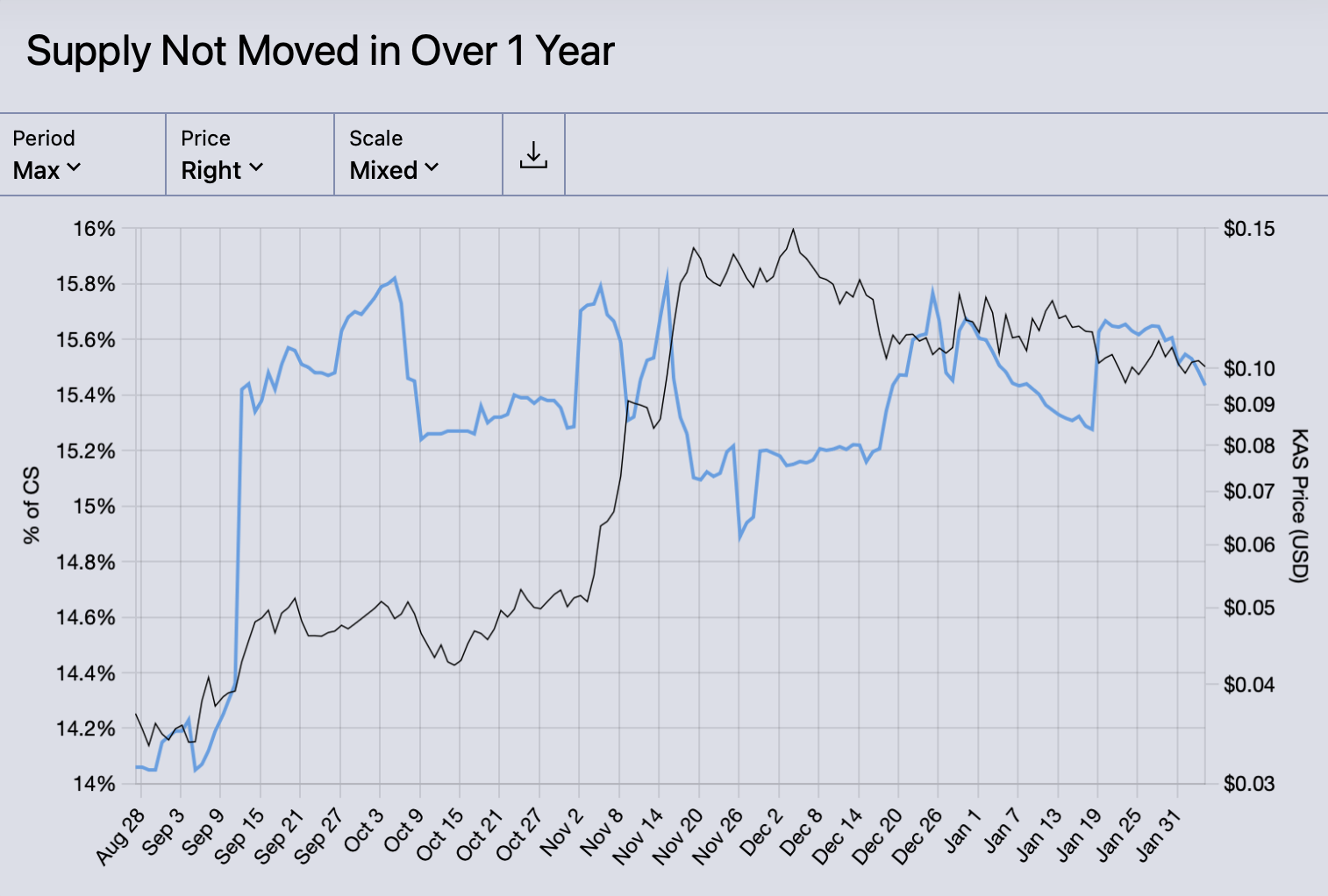 Kaspa 1+ Yr Inactive Supply.
The Kaspa mainnet turned 2 years old on November 7th, 2023. Since then, we’ve been able to track the supply inactive for more than 2 years. This metric has been rising almost daily.
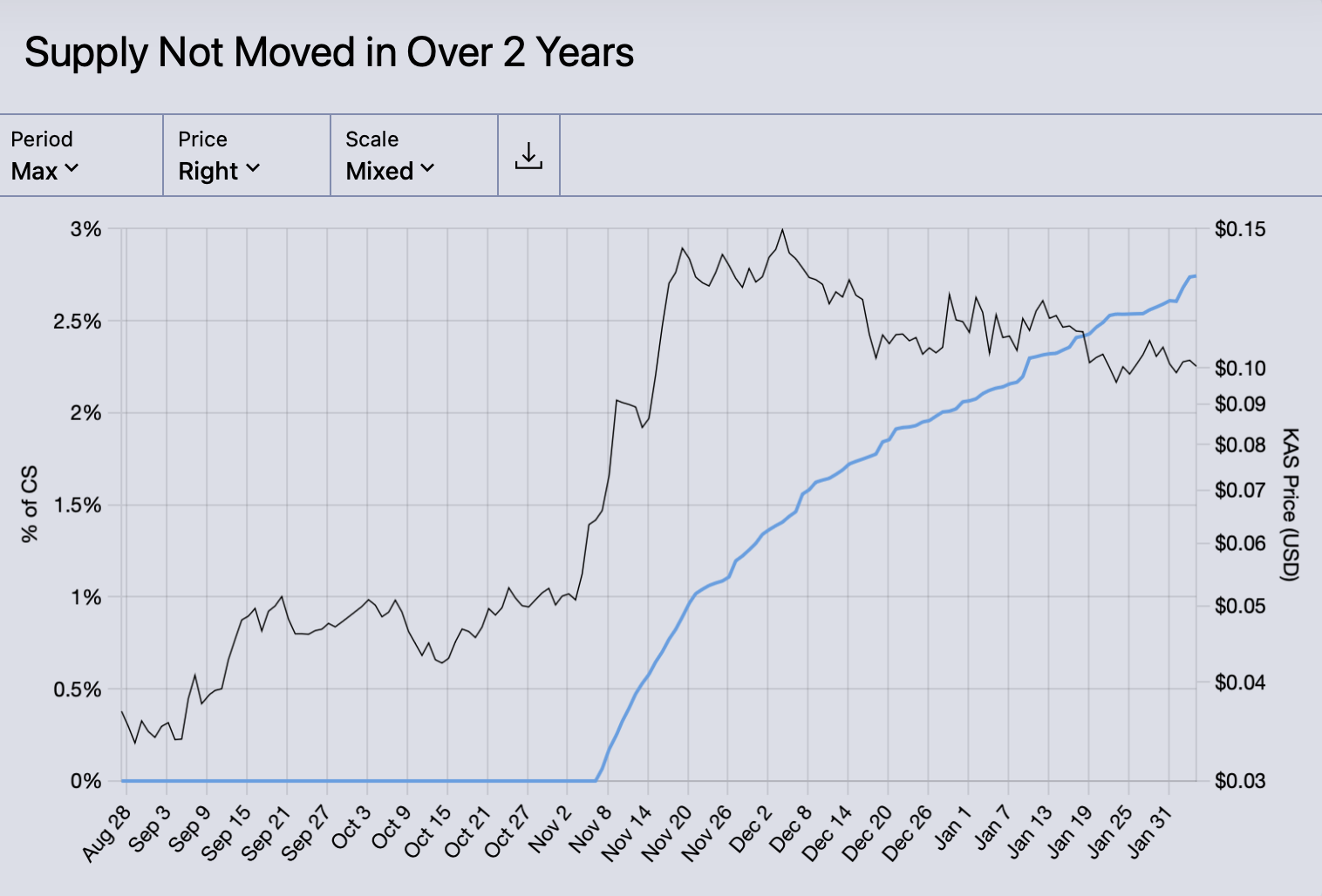 Kaspa 2+ Yr Inactive Supply.
While it’s encouraging to see growth in these two on-DAG (on-chain) metrics, it’s important to note the inclusion of lost and burned KAS. A significant burn event occurred in late November 2021 due to a mainnet bug. Furthermore, these metrics consider whole UTXOs and do not account for change returned to the sender, among other factors.
A quick comparison to Bitcoin is beneficial. Approximately 70% of Bitcoin’s supply has not moved in over 1 year, while just under 60% has not moved in over 2 years.
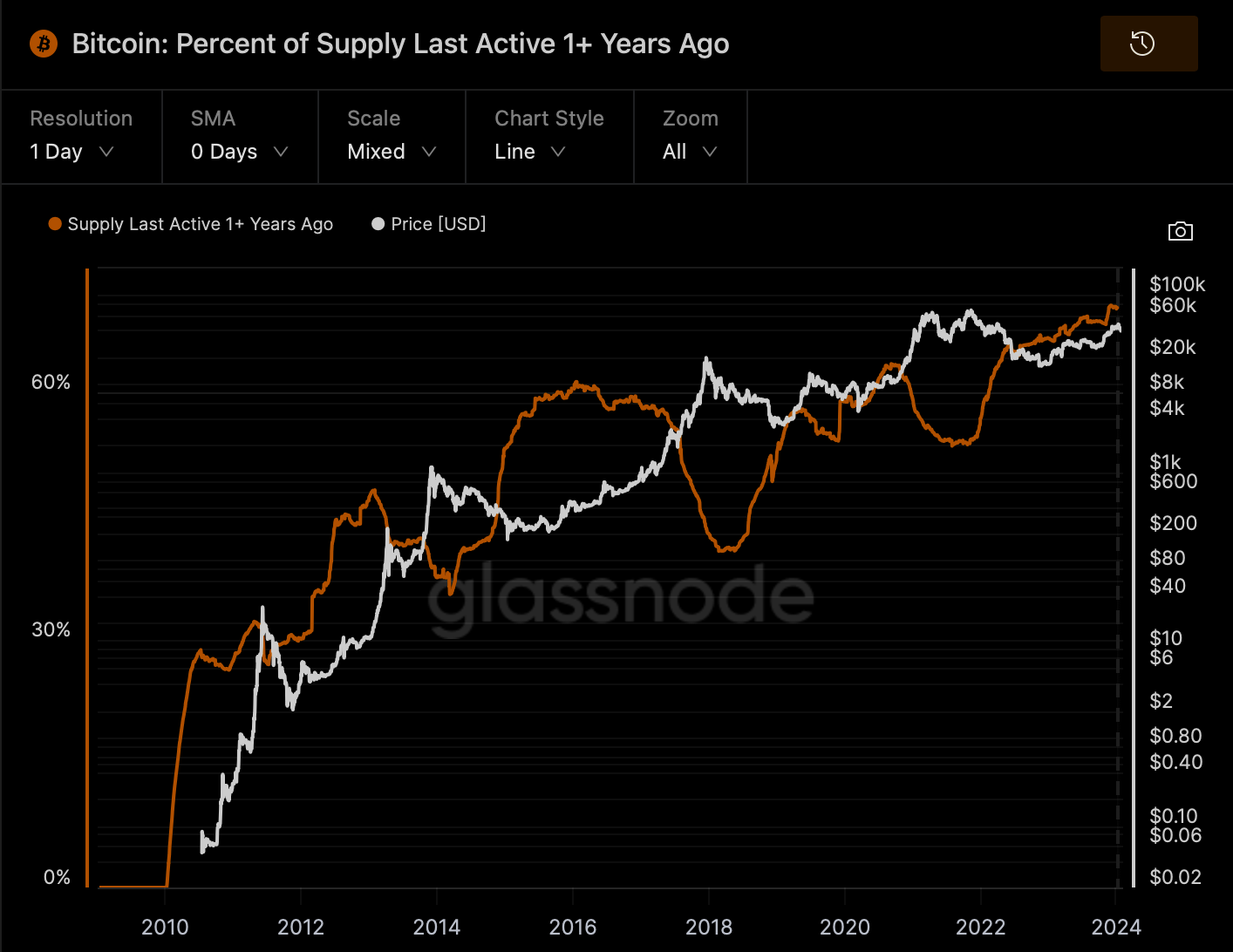 Bitcoin 1+ Yr Inactive Supply.
Hash Rate ATH
Kaspa’s hash rate continues to climb, reaching a new all-time high of ~183 PH/s within the last week.
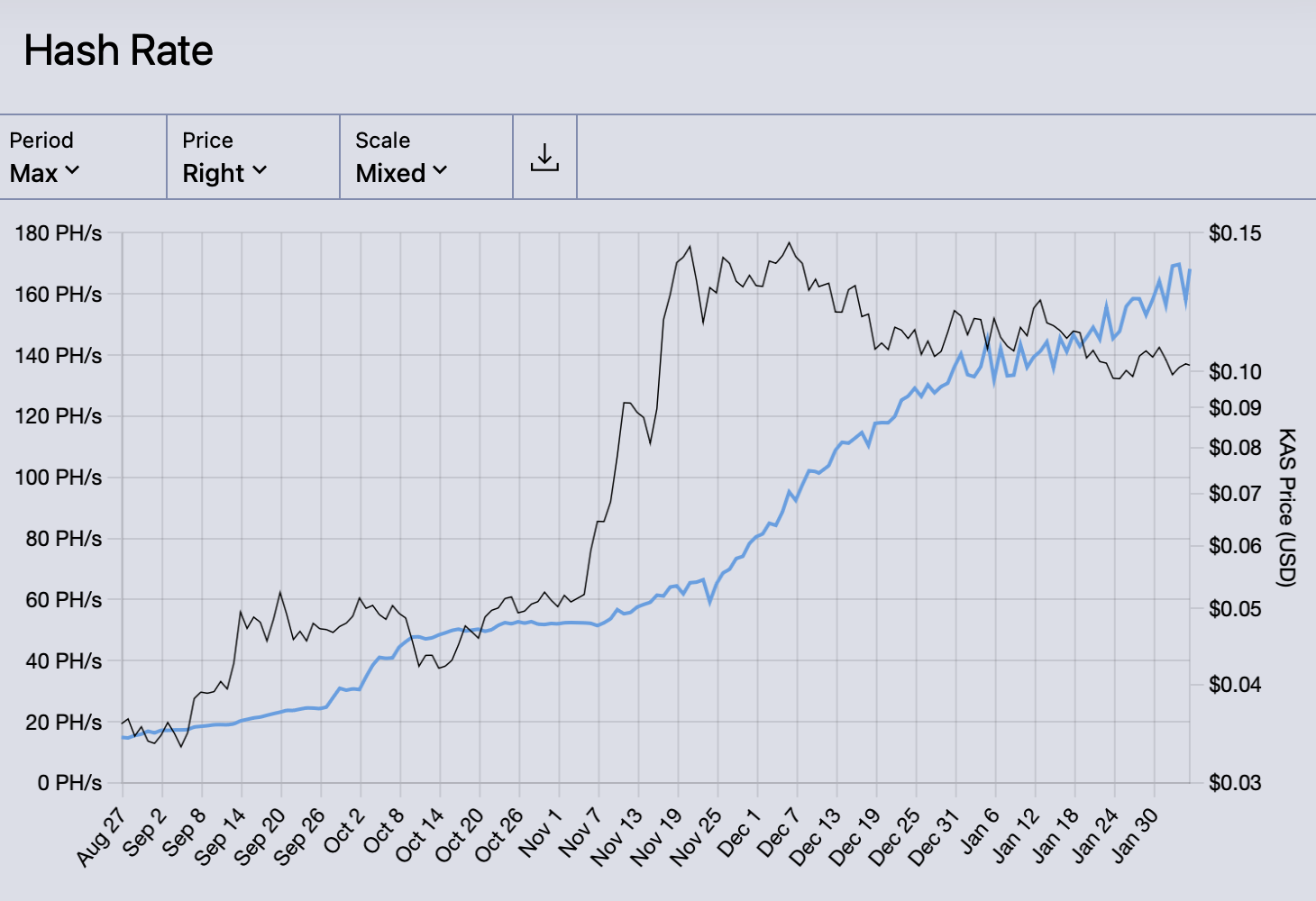 Kaspa Hash Rate
The common saying in the PoW world is that hash rate precedes price.
UTXO Consolidation
After declining significantly from late December to late January, the total count of UTXOs has stabilized over the last week. This stabilization suggests that the entity responsible for consolidating UTXOs has either finished or is taking a pause.
Despite the UTXO count stabilizing, the percentage of CS last moved within 24 hours has consistently been at 5%. This 5% mark has been observed daily since UTXO activity began in late December. It’s possible that 5% is the new baseline, or the consolidation is ongoing, with enough new UTXOs daily to offset the difference.
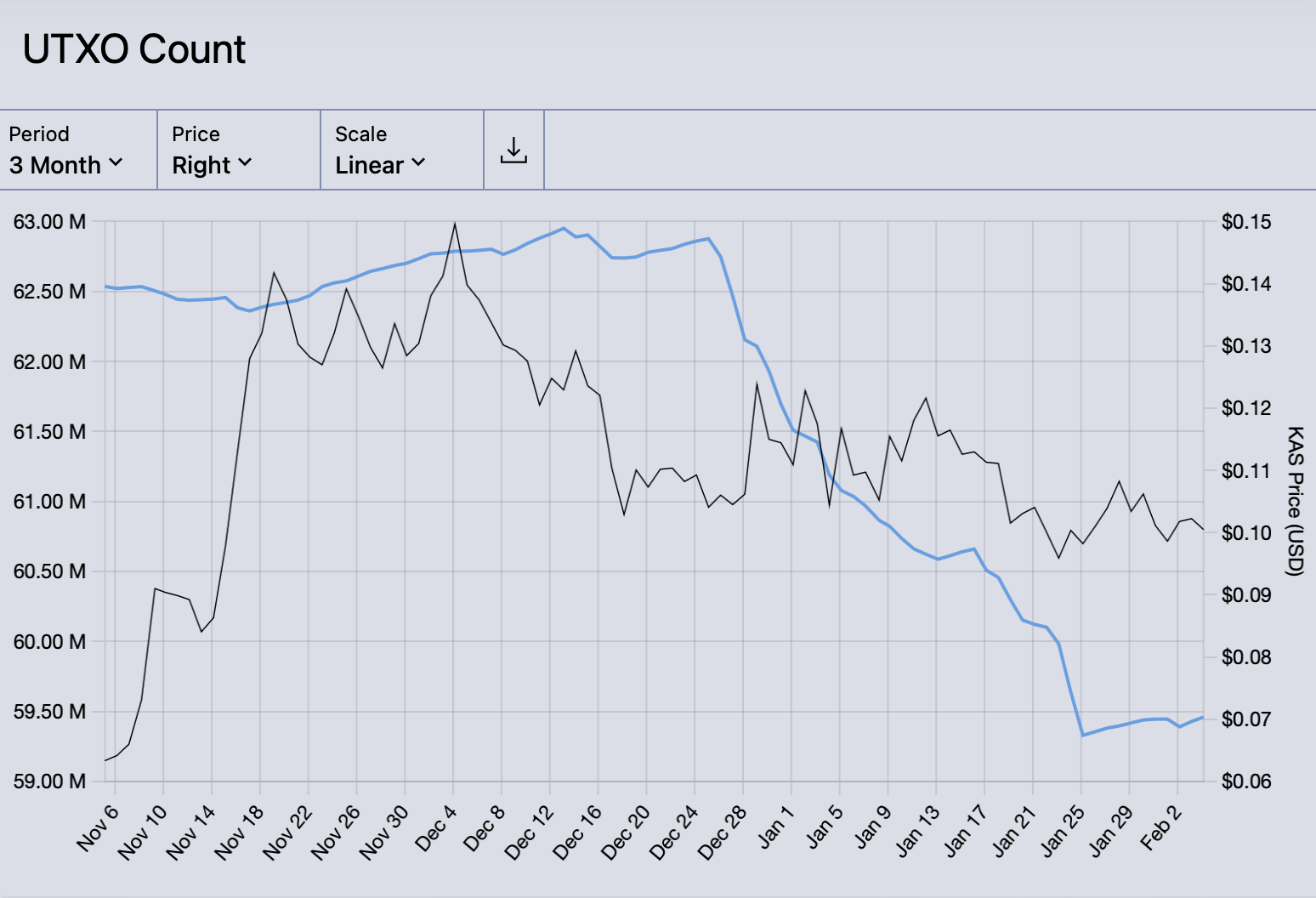 Kaspa UTXO Count.
Digging into Block Intervals (Kaspa is Fast)
We all know Kaspa operates at 1 block per second (BPS). However, examining block intervals offers an intriguing perspective. We define block intervals as the time (in milliseconds) between blocks. Let’s assess how closely Kaspa adheres to 1 BPS.
Here are the block intervals for the last few days:
| Date | Blocks | Mean Interval (ms) | Median Interval (ms) |
|---|---|---|---|
| 2024-01-28 | 88,819 | 972.74 | 703 |
| 2024-01-29 | 89,202 | 968.58 | 707 |
| 2024-01-30 | 88,608 | 975.08 | 713 |
| 2024-01-31 | 88,540 | 975.83 | 718 |
| 2024-02-01 | 88,187 | 979.68 | 725 |
| 2024-02-02 | 88,071 | 980.99 | 726 |
Indeed, Kaspa is operating slightly above 1 BPS!
Another interesting metric is the Selected Parent Chain (SPC) block interval:
| Date | SPC Blocks | Mean Interval (ms) | Median Interval (ms) |
|---|---|---|---|
| 2024-01-28 | 46,506 | 1,857.78 | 1,507 |
| 2024-01-29 | 47,348 | 1,824.75 | 1,490 |
| 2024-01-30 | 47,466 | 1,820.25 | 1,483 |
| 2024-01-31 | 48,540 | 1,779.99 | 1,467 |
| 2024-02-01 | 48,417 | 1,784.40 | 1,503 |
| 2024-02-02 | 48,358 | 1,786.62 | 1,496 |
An initial observation here is that there are approximately 47,000 SPC blocks daily. At face value, given Kaspa operates at 1 BPS, one would expect around 86,400 SPC blocks daily. However, some nuances result in this discrepancy. For now, it’s important to be aware of this difference. More details will be provided in a future post.